
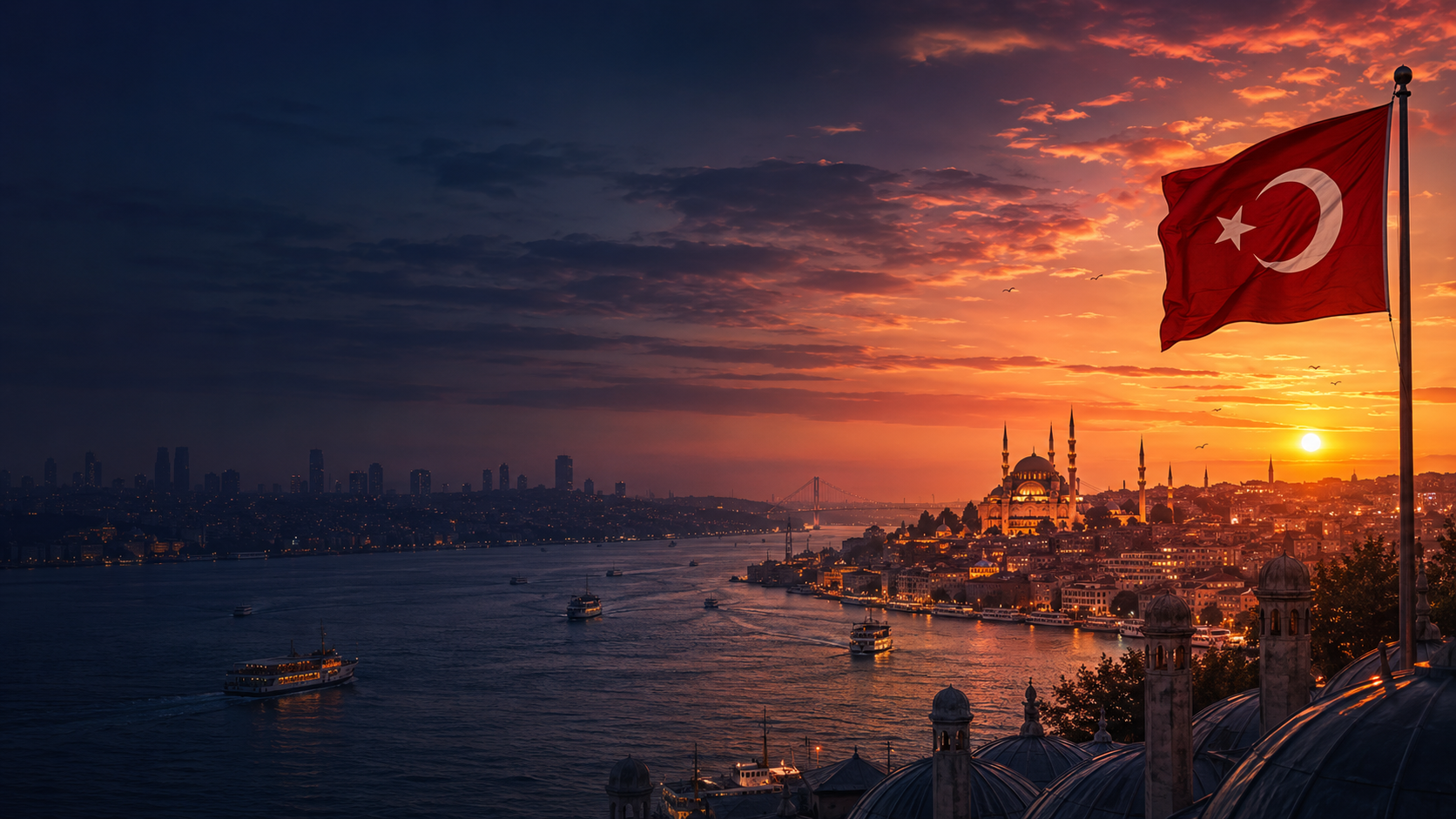
President Erdoğan marks Hagia Sophia anniversary with book on the “spirit of conquest”
President Recep Tayyip Erdoğan has written a special preface for a new anthology marking the four-year anniversary of the reopening of the Hagia Sophia as a mosque.
The book, titled " Fethin Mührü" (The Seal of Conquest), has been published by Demirören Yayınları and is available in Turkish, English, and Arabic.
In his preface, Erdoğan emphasises that the Hagia Sophia symbolises the " spirit of conquest" and " our nation' s historical consciousness," a statement that reiterates a core element of the government' s ideological framework and its perspective on Turkey' s historical role.
The decision in 2020 to convert the Hagia Sophia from a museum into a mosque triggered significant international criticism and concern.
The monument, which was originally built as a Byzantine cathedral in the 6th century under Emperor Justinian I, served as a mosque under the Ottoman Empire following the conquest of Constantinople in 1453, and subsequently as a secular museum since 1934, possesses a complex history that encompasses both Christian and Islamic cultural heritage.
The conversion was viewed by many international actors, including UNESCO, the Orthodox Church, and Greece, as an attack on cultural and religious pluralism and the established status quo. The historical and symbolic significance of Erdoğan’s emphasis on the " spirit of conquest" in the preface to " Fethin Mührü" is not coincidental.
It refers directly to the symbolic importance of the Ottoman Empire’s conquest of Constantinople (modern-day Istanbul) in 1453, when the Hagia Sophia was first converted into a mosque.
This rhetoric strongly appeals to nationalist and conservative segments of the Turkish population and serves to reinforce the government' s narrative of Turkey as a resurgent historical superpower with a unique Islamic identity that distances itself from the secular legacy of Kemal Atatürk.
The release of the book and the President' s message on the anniversary of the reopening send a clear signal that the Turkish government remains committed to its policies and its interpretation of the Hagia Sophia' s role.
This also sustains the international debate regarding cultural heritage, religious pluralism, and Turkey' s foreign policy direction, particularly in relation to the West and neighbouring countries such as Greece, which historically maintains close ties to the monument' s Byzantine and Christian past.
The constant reference to the conquest and its spirit underscores a nationalist trajectory that defines Turkey' s politics and international relations.
Source: Star